
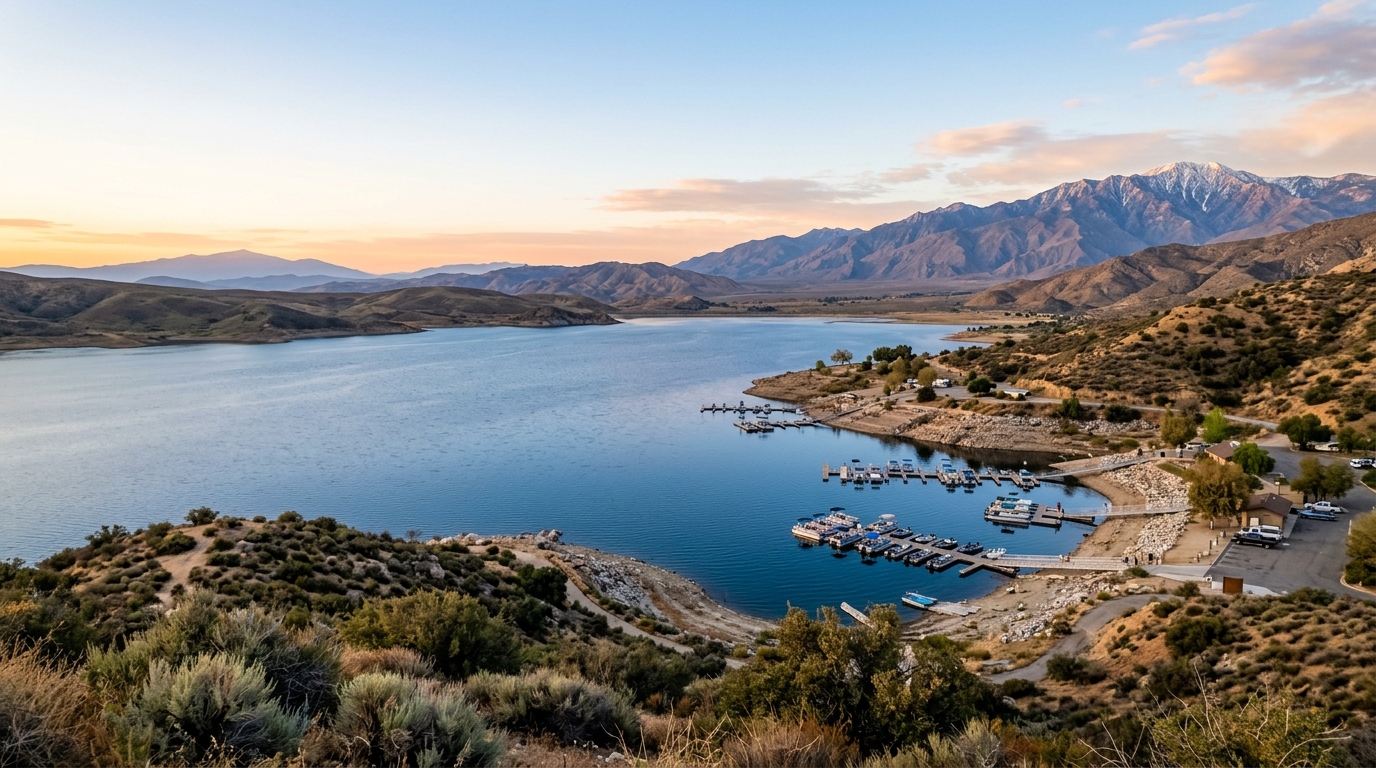
Diamond Valley Lake is one of Hemet’s most recognizable outdoor destinations, but it is not a conventional swimming lake or open-access city park. It is a major drinking-water reservoir managed by the Metropolitan Water District of Southern California, with recreation provided under rules designed to protect water quality, wildlife habitat and public safety. A successful visit starts with checking current operating information rather than assuming the lake works like other Southern California recreation areas.
The marina currently supports fishing, boating, hiking and biking, but access can change with heat, weather, water level, seasonal trail operations and maintenance. The facility is generally closed Mondays and Tuesdays, and the operator may shorten trail hours or suspend rentals during extreme conditions. Use this guide as a planning framework, then confirm details through the official Diamond Valley Marina website shortly before leaving. Hemet Living’s Outdoors guide and Things to Do hub can help you compare the lake with other local options.
Start With Current Access, Weather and Activity Rules
Diamond Valley Lake’s schedule is more restrictive than many visitors expect. The marina’s current posted hours are Wednesday through Sunday, 5:30 a.m. to 6:30 p.m., with no entrance after 5:30 p.m. Those hours can change by season or operating condition, so they should not be copied into a permanent itinerary without a verification note.
At the time of writing in July 2026, the marina homepage warned that the Lakeview Trail was closing at noon during a heat advisory and that e-bikes were temporarily unavailable. This shows why checking the homepage on the morning of a visit matters. A published closing time does not guarantee that every trail or rental will remain available all day when temperatures rise.
Check the calendar before choosing your arrival time
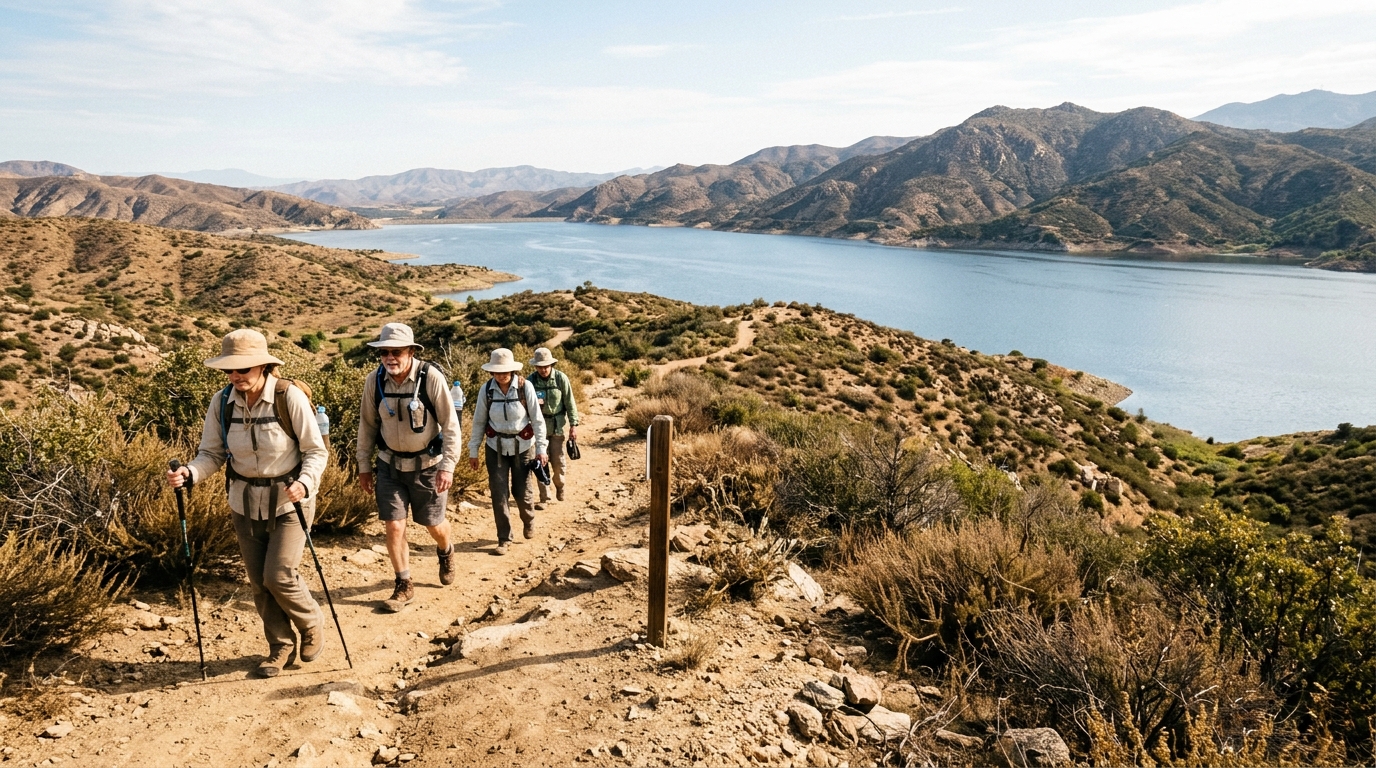
Arriving early is usually practical, especially in warmer months. Morning temperatures are easier for hiking, cycling and shoreline access, while afternoon heat can create demanding conditions on exposed roads and trails. Bring more water than you expect to need, sun protection, closed-toe footwear and a realistic turnaround time. Do not build an itinerary that depends on entering near the final admission cutoff.
The Wildflower Trail operates seasonally rather than year-round. The marina currently describes it as typically opening from late February through early May, but bloom conditions and exact dates vary. The Metropolitan Water District has described the trail as a 1.3-mile loop with some rugged terrain. A strong flower season can attract heavier visitation, while dry years may produce a less dramatic display. Stay on designated routes and do not treat social-media photographs from a previous spring as a promise of current conditions.
Seasonal trails require a same-day check
The marina directs trail visitors to park at the marina and says there is no Wildflower Trail access through other routes. Restrooms for trail visitors are available at the marina, but facilities along the broader route may be limited. People with mobility concerns should review the current trail description and contact the operator before assuming a route will be accessible.
The Lakeview Trail may be available outside the spring wildflower period, but heat restrictions can still apply. Wind, storms, emergency operations and water-quality concerns may also affect lake use. Treat closure notices as operational. When the lake is closed or a trail is shortened, use a nearby indoor or lower-exposure alternative instead of trying to improvise access.
Choose one main activity and understand its limits
A day at Diamond Valley Lake works better when you choose a primary purpose. Fishing from shore, renting a boat, launching an approved private vessel, hiking and cycling each involve different fees, equipment and physical demands. Trying to combine all of them in one short visit can lead to missed rental windows or an uncomfortable rush back to the gate.
Visitors who only want to see the water should not assume they can wander freely around the reservoir. The marina FAQ says a short visitor pass may be issued during limited daytime hours, but policies can change. Ask at the entrance rather than entering a fishing or launch area without the appropriate pass.
Fishing involves both state and lake requirements
California requires a valid sport-fishing license for anglers age 16 or older, except during officially designated exceptions such as Free Fishing Days. Diamond Valley Lake also requires its own fishing-access pass for anglers, including children, and shoreline fishing carries an additional posted fee. The marina FAQ currently lists an $11 vehicle-entry pass, a $9 fishing-access pass and a $4 shoreline fee, but visitors should confirm the amounts because fees can change.
Shore fishing is allowed only in designated areas. The marina describes roughly 2.5 miles of accessible shoreline, reached by an unpaved fire-road hike beginning about a quarter-mile from the parking area. It characterizes the approach as moderate to difficult. Carrying rods, tackle, water and a cooler can make that distance feel longer, especially in heat. Live bait such as fish or frogs is not allowed, and current California size, bag and gear regulations still apply.
Boating rules protect drinking water and habitat
There is no swimming or other body contact with the water. Pets, alcohol and outdoor grilling are also prohibited. Rental boats include life jackets, and the renter must be at least 21 years old. Reservations are recommended when a specific boat or time matters because walk-up availability is not guaranteed and rentals stop before the facility closes.
Private boats must meet detailed requirements. The marina states that vessels must be clean, drained and dry, pass inspection and use an approved engine type. Inflatable vessels and sit-on-top kayaks are not permitted, while qualifying sit-inside touring or recreation kayaks may be allowed. Boats must carry required safety equipment, and speed limits apply near shore, dams, operational structures and marina areas. Review the full Diamond Valley Marina policies before transporting a vessel.
Build a Flexible Hemet Day Around the Lake
The strongest itinerary leaves room for closures, heat and changing energy levels. Diamond Valley Lake can be the main event, but it does not need to fill every hour. A morning outdoors followed by an indoor cultural stop is often more practical than staying exposed through the hottest part of the day. Keep food plans simple because the marina store focuses on packaged snacks and beverages rather than a full restaurant meal.
Pack water, sun protection, comfortable shoes and any activity-specific documents before arriving. Download or screenshot the current rules because mobile service can be inconsistent around open-space areas. Do not depend on last-minute equipment availability, and match the plan to the youngest or least experienced participant.
Pair the reservoir with nearby natural-history context
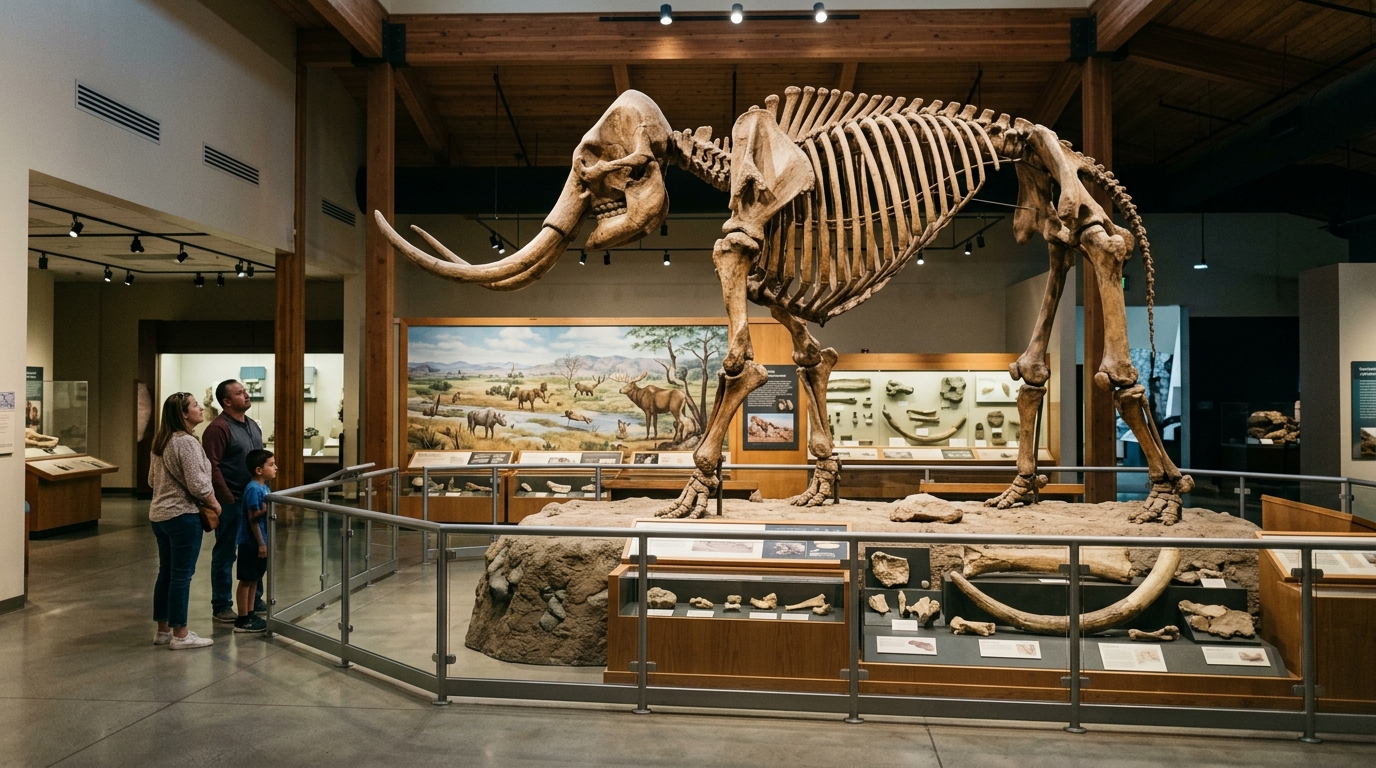
The Western Science Center is a logical companion stop because its collections are directly connected to fossils discovered during excavation of Diamond Valley Lake. Its permanent “Snapshots in Time” exhibit presents Ice Age animals from the region, including the Pacific mastodon known as Max. The museum currently operates Tuesday through Sunday, with ticketing and closing times posted on its official visitor page.
This pairing changes the day from a simple lake visit into a broader Hemet story about water, landscape and deep history. It also provides an indoor backup when weather limits outdoor time. Museum admission, exhibitions and holiday closures can change, so verify the current hours and admission information before promising a combined itinerary.
Another option is to continue exploring Hemet’s outdoor identity through the Simpson Park and Weston Park guide. Simpson Park offers a different landscape and broader valley views, but combining two exposed outdoor areas on a hot day may be unrealistic. The Relocation Guide can also help prospective residents understand how these recreation assets fit into everyday life.
A practical day plan with room to change
Begin by checking the marina homepage for closure notices, then arrive early for the activity you reserved or prepared for. Spend the morning fishing, hiking, cycling or boating rather than switching repeatedly between activities. Leave before heat, wind or fatigue becomes a problem. After lunch, continue to the Western Science Center if its hours align, or choose another verified indoor stop from the local directory.
Do not advertise the Wildflower Trail as part of a year-round itinerary, and do not describe swimming, beaches, pet access or open-water recreation that the rules prohibit. Avoid promising boat availability without a reservation. When publishing current fees or hours, include the date checked and link directly to the operator.
Diamond Valley Lake rewards preparation. Visitors who understand the no-contact water rules, seasonal trail schedule, fishing requirements and boating restrictions are less likely to lose time at the gate or arrive with unsuitable equipment. Plan one primary activity, start early, maintain a backup option and verify conditions immediately before travel. That approach creates a better day while respecting the reservoir’s role in Southern California’s water system and the protected landscape around it.