

Two Hemet park initiatives are attracting attention for different reasons. ELEVATE Simpson Park presents a modernization vision for one of the city’s best-known outdoor destinations, while the Weston Park redesign is a community-led planning effort for an older neighborhood park near Florida Avenue and Thompson Street. Neither should be described as fully built simply because concept images or planning language appear online.
The City’s current ELEVATE Simpson Park page still identifies its posted proposal as “Version 8 – DRAFT.” The Weston Park page describes a conceptual plan intended as a long-term roadmap that may be implemented in phases as funding becomes available. Those labels matter. They tell residents, homebuyers and local publishers to distinguish an operating park from a proposed improvement, an approved design from a preliminary concept, and secured construction money from a future grant search. This guide explains what official sources confirm, what remains uncertain and how to follow both efforts responsibly.
What the Official Record Confirms Today
The two initiatives are at different scales and stages. Simpson Park is an existing wilderness recreation area in the Santa Rosa Hills southeast of Hemet. Weston Park is an existing four-acre neighborhood park at the northeast corner of Florida Avenue and Thompson Street. The question is what improvements have moved beyond discussion and what still depends on design, approval, funding or construction.
ELEVATE Simpson Park is a modernization strategy, not a completed expansion
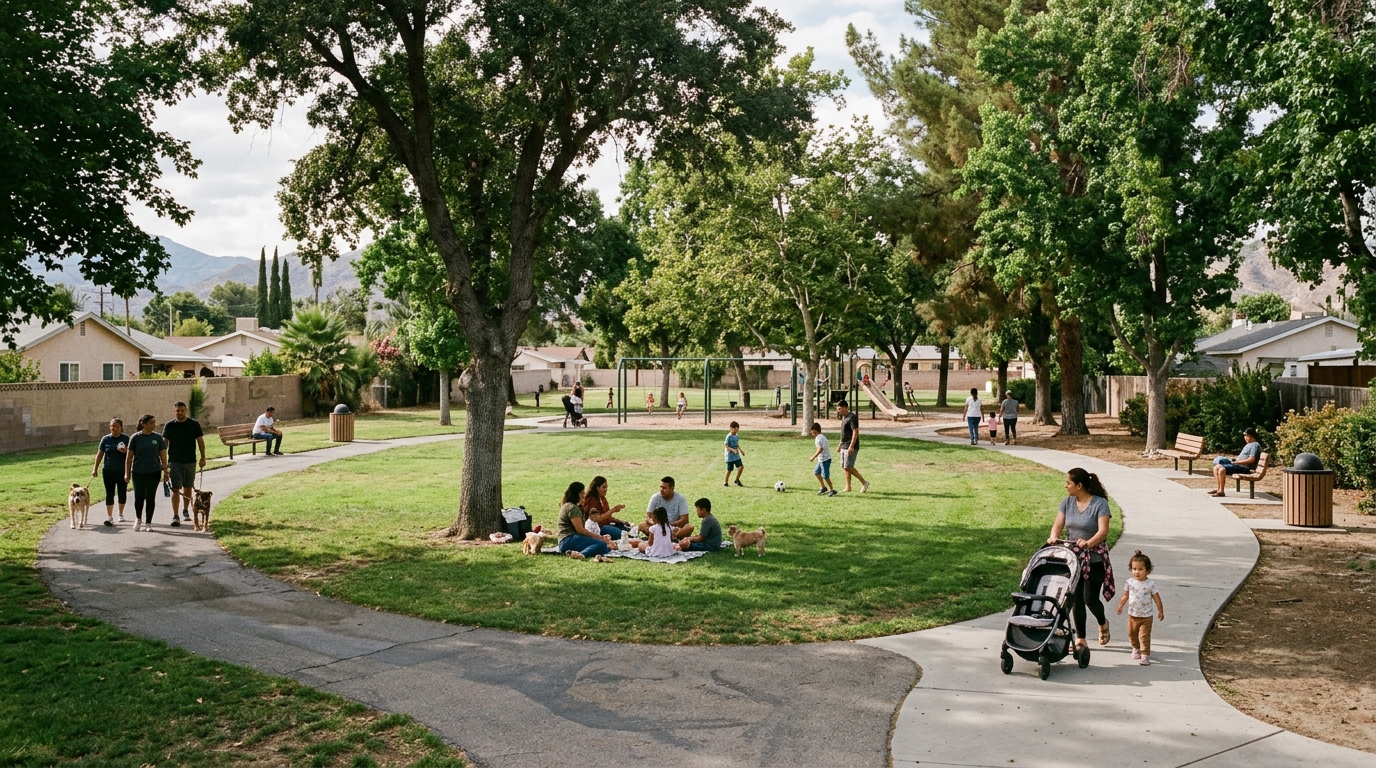
The City’s regular Simpson Park visitor page confirms that the park is currently open for recreation and offers picnic facilities, restrooms and trails used for hiking, mountain biking and equestrian activity. It also says the site is undergoing continued development and refurbishment. Visitors therefore have an operating park today, even while longer-term improvements are being discussed.
The separate ELEVATE Simpson Park page presents a broader modernization strategy focused on access, the park’s natural character and its potential as a regional destination. The page uses ambitious language, but its featured proposal is visibly marked as a draft. An August 2025 City strategic-plan update also described the strategy as a draft anticipated for Planning Commission presentation, with City Council action expected afterward.
What official sources do—and do not—confirm
The official record confirms an active planning effort and a City intention to modernize, expand and beautify Simpson Park. It does not, from the currently available pages, establish that every idea shown in the draft has final approval, complete engineering, environmental clearance, a construction contract or full funding. I did not find a current City source clearly documenting final City Council adoption of the posted Version 8 proposal. Until that record appears, publishers and real-estate professionals should call it a draft strategy rather than an approved construction plan.
Even the City’s pages show why source checking matters: the regular visitor page describes Simpson Park as 483 acres, while the ELEVATE page describes it as 438 acres. That discrepancy does not change the park’s value, but it is a reminder not to repeat every number without context. For trip planning, use the current visitor page. For future improvements, use the ELEVATE page and later agendas, staff reports or capital documents. The Hemet outdoors guide should also separate current amenities from future possibilities.
Weston Park has completed community design work, but construction remains funding-dependent
The City’s Weston Park redesign page confirms that Hemet partnered with Community Works Design Group and gathered input through surveys, public outreach and neighborhood engagement. The City says residents helped shape ideas for amenities, recreation, gathering areas and family-oriented features. The City’s fiscal-year 2025–26 strategic-plan update further documented a consulting contract, a September 2025 kickoff and development of three preliminary concepts after public engagement.
A consultant was engaged, public input was collected and concept alternatives were prepared. However, the City’s own page still describes the outcome as a conceptual plan and long-term roadmap. It says staff will pursue grants and possible partnerships, with implementation occurring in phases as funding becomes available.
What the current stage actually means
Residents can reasonably say that Weston Park has an active redesign program supported by community input. They should not say the entire redesign is funded, under construction or scheduled for completion unless a newer official notice confirms those points. The strategic-plan update says a final design would be presented to the Planning Commission and City Council for review and approval. The public project page then emphasizes grant pursuit and phased implementation, showing that design work and construction financing are separate steps.
A splash pad is a useful example. The City’s action item specifically called for integrating splash pads into 30% plans and outreach. That confirms the feature was part of the design process; it does not confirm that a splash pad is open or that construction money has been secured. Similar care should be used for playgrounds, gathering spaces, landscaping or other amenities appearing in concepts. Any AI-generated illustration of the future park should carry the label “Conceptual visualization—not an official rendering.”
How Residents and Property Researchers Should Use These Plans
Park investment can improve recreation and neighborhood gathering spaces, but it can also bring construction, traffic changes and operating costs. People considering a nearby home should evaluate both the current park and the realistic project stage. A proposal should never replace property-specific inspection, neighborhood visits or review of official records.
For Simpson Park, the immediate value is the existing trail and open-space experience. For Weston Park, the immediate value is the current neighborhood park and the documented public-design process. Potential future upgrades may add value for residents, but the timing and final scope remain dependent on decisions that can change. Use the Development and Planning section for status-based updates rather than promotional predictions.
Use a project-stage checklist before repeating a claim
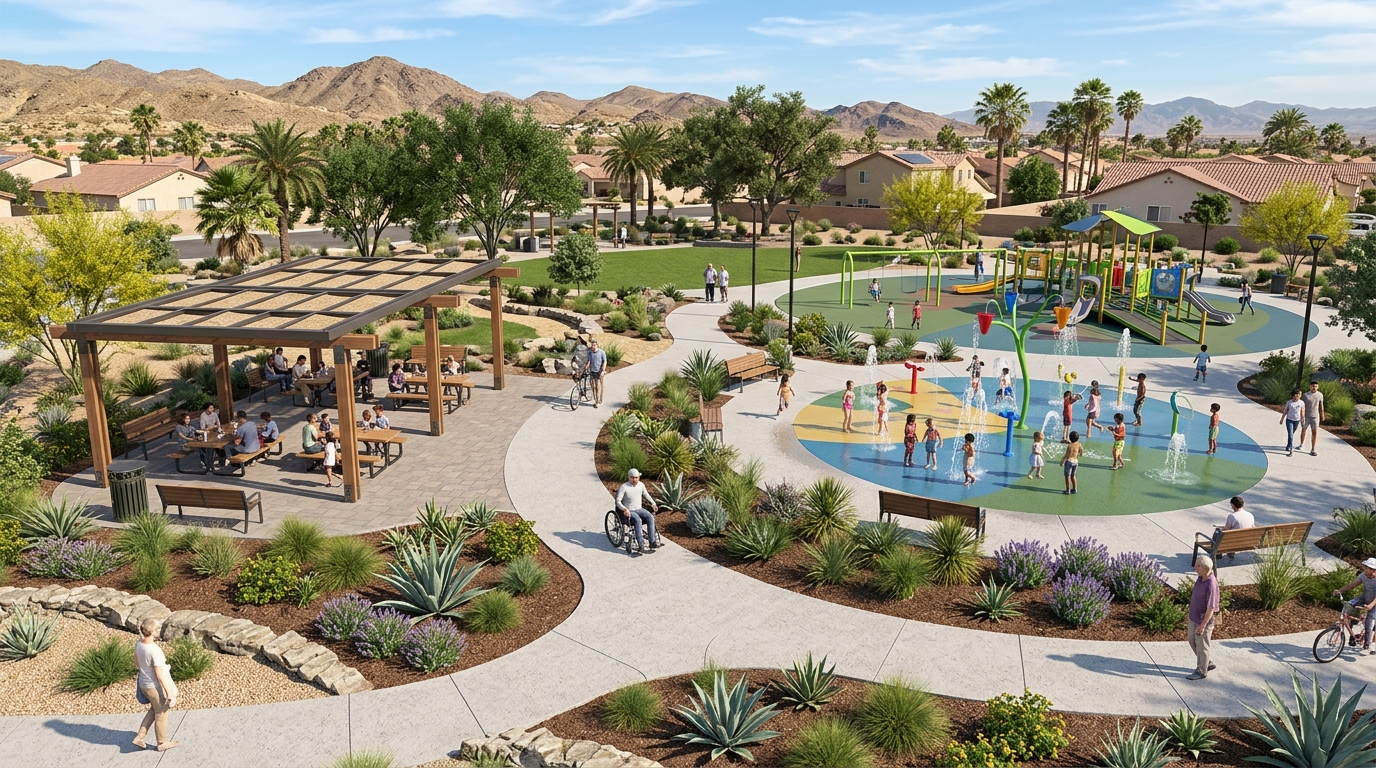
Start with the project’s official page, then look for a dated staff report, agenda item, adopted resolution, capital-improvement entry, grant award, bid notice or construction announcement. Each document answers a different question. A concept plan shows design intent. A council approval shows governmental action. A grant award identifies funding but may include conditions. A bid award identifies a contractor. A notice to proceed is stronger evidence that work is moving toward construction. A ribbon cutting confirms completion.
Identify which parts of a plan apply to the whole park and which are alternatives. Preliminary designs may include layouts that cannot all be built. Engineering can expose drainage, accessibility, utility, wildfire, habitat or cost constraints. A responsible update should state the source date and use clear labels such as proposed, under design, funded, in bidding, under construction or completed.
Questions for nearby residents, buyers and visitors
Nearby residents and buyers should ask whether a project has a final approved plan, whether funding covers design or construction, which phase is next and whether operating hours, parking, lighting or event use may change. Visit the area during ordinary weekday and weekend periods. Do not assume proximity to a park guarantees a quiet block, easy parking or a particular view. Review the broader neighborhood guide and the relocation guide before making a housing decision.
Visitors should check the City’s current operating information shortly before traveling. Simpson Park’s official page lists daily hours and warns that gates close automatically, while the Parks Department posts maintenance closures and other notices. Weston Park is currently listed as closed every Monday for maintenance. Heat, fire conditions, maintenance or special work can affect access, so a saved screenshot or old blog post is not enough.
How to follow updates without confusing plans with promises
Bookmark the two official project pages and the City’s agendas and strategic-plan updates. When a new rendering appears, look for the document title, date and approval status. When funding is announced, check whether it pays for planning, a specific phase or the full buildout. Construction is reported, confirm the start area, expected duration and any closures. Hemet Living should link readers directly to those records and correct older articles when the status changes.
For local content, the best approach is to cover milestones rather than speculate about property prices. Useful milestones include final concept selection, commission or council review, grant awards, construction documents, bidding, notices to proceed, phased openings and completed amenities. This creates credible internal links between the Things to Do hub, the outdoors section and earlier reporting such as Hemet RISES and property decisions.
ELEVATE Simpson Park and the Weston Park redesign show that Hemet is actively examining how its public spaces can serve residents in the future. The confirmed story is meaningful without exaggeration: Simpson Park remains an operating wilderness destination with a draft modernization strategy, while Weston Park has moved through community engagement and concept development but still depends on approval, funding and phased implementation. Readers should enjoy what exists today and follow official milestones before treating tomorrow’s images as finished places.