

Hemet RISES is the City of Hemet’s economic development strategy, adopted in August 2024 to guide business investment, community improvements and administrative changes. The name stands for Resurgent Investment Strategy for Economic Success. For homeowners, buyers, landlords and commercial investors, the plan is useful because it identifies where the City wants to concentrate effort. It is not, however, a forecast of property appreciation, a construction guarantee or a substitute for reviewing the exact parcel, zoning, permits and surrounding conditions.
The most practical way to use Hemet RISES is as a research map. It points readers toward downtown revitalization, the Hemet Auto Mall, hospitality, public art, healthcare, parks, business incentives and development-process reform. Those themes may affect how particular corridors or properties function over time, but the effect will depend on funding, approvals, private participation and actual completion. Anyone considering a move should pair this strategy with the broader Hemet relocation guide and the property-specific steps in the moving to Hemet housing guide.
What Hemet RISES Actually Is
The official Hemet RISES overview describes a strategy intended to support business retention and expansion, attract strategic investment and improve the development experience. The full August 2024 strategy organizes its work around three connected ideas: Places, People and Process. That structure matters because the plan is broader than a list of construction projects. It combines physical improvements with events, marketing, workforce initiatives, grants and changes to how businesses and development applications interact with the City.
The three-part framework: Place, People and Process
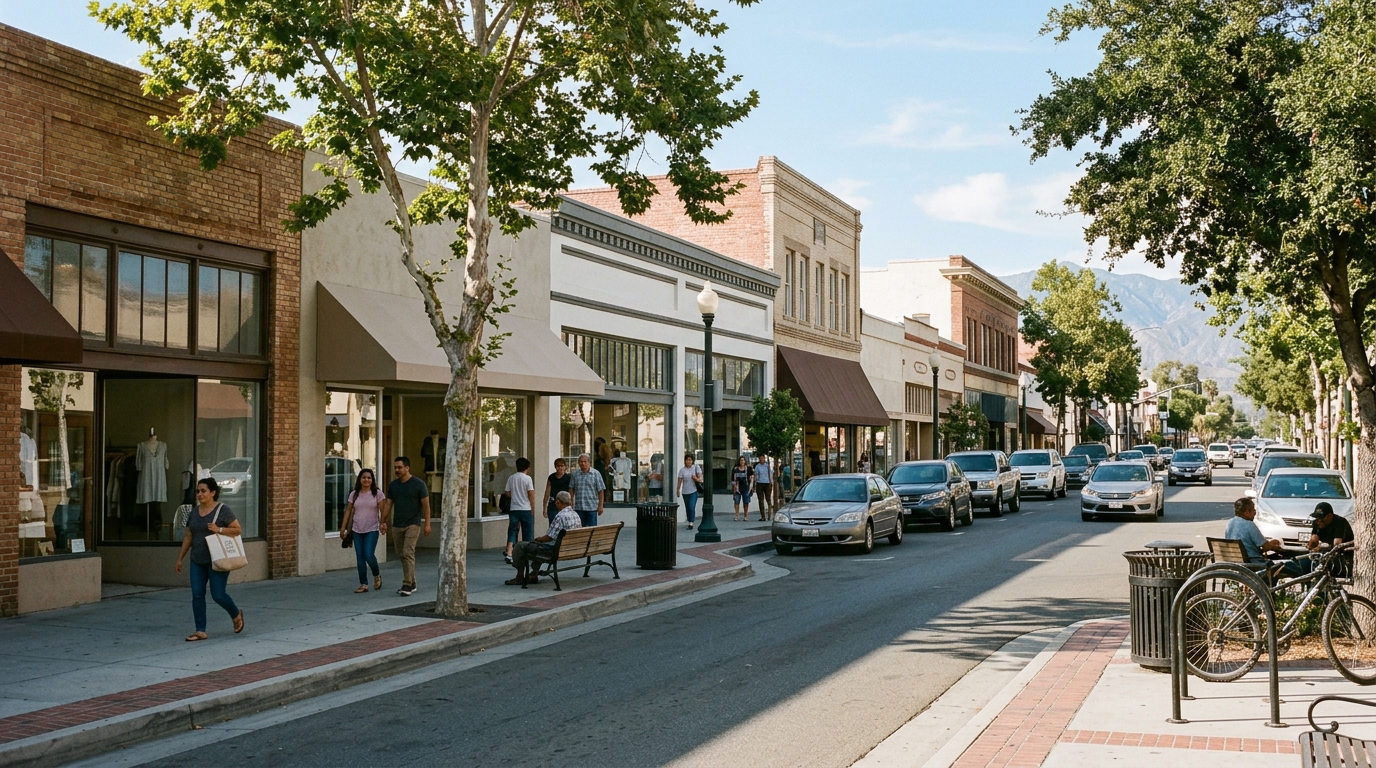
The “Places” component addresses physical assets and investment opportunities. Its action list includes the Hemet Auto Mall, downtown restaurant investment, support for the Historic Hemet Theatre, possible mixed-use redevelopment around City-owned property, hotel and campground incentives, soccer-field design, healthcare-sector expansion, Weston Park planning, façade improvements, public art and streetscape ideas. Some are specific capital or redevelopment concepts; others are incentive programs designed to encourage private owners to invest.
The “People” component focuses on attracting residents and visitors to local businesses. The strategy discusses restaurant events, arts and culinary programming, city branding, pop-up businesses and recurring downtown experiences. These activities can increase visibility and foot traffic, but their property impact is indirect. A successful event may help nearby businesses for a weekend without permanently changing rents, vacancy, traffic or neighborhood demand.
The “Process” component is aimed at City operations. It includes studying development staffing, improving permitting, using market data, refining temporary-use approvals, supporting business outreach and creating workforce-related programs. For a property owner, this may be the least visible section, yet it can be important. A clearer or more efficient review process can affect project timelines, but it does not remove zoning requirements, building codes, environmental review, utility constraints or fees imposed by other agencies.
Confirmed policy does not equal completed construction
The strategy’s implementation table assigns initiatives to Year 1, Year 2 or ongoing work. That schedule shows intended sequencing, not proof that every item was funded, designed, permitted and built within that period. Language such as “explore,” “consider,” “support,” “advance planning” and “position for funding” signals an earlier stage than an awarded construction contract or completed project. Before relying on any item, check the City’s current project page, staff report, budget, meeting agenda or press release.
This distinction is especially important in real estate marketing. A listing should not describe a proposed botanical garden, campground, mixed-use redevelopment or park redesign as an existing amenity. A buyer should also avoid paying a premium based only on an anticipated project. Confirm the site, governing agency, ownership, approvals, funding source and current timeline. Hemet Living’s Development and Planning coverage is designed to separate adopted policy, active implementation and conceptual proposals.
What has moved from strategy toward implementation
Several later City updates show that parts of Hemet RISES have progressed beyond the original strategy document. The City completed pavement rehabilitation at the Hemet Auto Mall and held a reopening in February 2025. It also announced restaurant and commercial-kitchen assistance, including an expanded citywide Kitchen Grant round in 2026. The City has maintained commercial façade assistance and launched an entrepreneur and small-business grant program using federal Community Development Block Grant funding.
Public-realm and identity work has also produced visible activity. In July 2026, the City celebrated completion of its first community-led public mural. That is a completed public-art example, but it should not be treated as evidence that every Arts in Public Places proposal or every streetscape idea has been delivered. The City also announced in 2025 that Hemet RISES received an Award of Merit from the California Association for Local Economic Development. Recognition validates the strategy as a planning effort; it does not independently measure property performance.
Current examples to verify before relying on them
Property decisions should be based on the latest status, not the original timetable. Grant programs can change eligibility, geography, award limits and application dates. A completed pavement project is different from the separate goal of attracting more dealerships. A mural is different from a citywide public-art network. A funded design process is different from completed park construction. Review the City’s current strategic-plan updates and relevant Economic Development pages before repeating a claim.
Owners considering façade, restaurant or small-business assistance should read the active program rules and confirm whether applications are open. The current Kitchen Grant page, for example, explains that assistance is intended for commercial kitchen development and that participation involves specific requirements. Program availability should never be assumed from an older announcement.
How Buyers, Owners and Investors Should Use the Strategy
Hemet RISES is most useful when combined with parcel-level due diligence. Start by identifying which strategy theme is relevant to the property. A downtown storefront may be affected by façade programs, restaurant investment, public art or temporary events. A site near the Auto Mall may be more connected to commercial traffic and dealership expansion. A home near a proposed park or streetscape concept requires different questions about construction status, access, noise and maintenance.
Evaluate location-specific effects, not citywide promises
Economic-development plans can create opportunities and tradeoffs. More dining, events or visitor activity may support nearby businesses while increasing evening traffic, parking demand or noise. New healthcare or commercial investment may improve access to services and jobs, but the benefit to a particular residence depends on distance and travel routes. Faster permitting may help a project move forward, but adjacent owners still need to understand the approved use, operating hours, site design and mitigation requirements.
Use the Hemet neighborhoods guide to understand the broader area, then inspect the immediate block and planning context. Search public agendas and project records by address or assessor parcel number. Review zoning and specific-plan documents where applicable. Visit at relevant times and ask whether a nearby property is simply identified as an opportunity or is subject to an active application. A strategy can explain intent; only current records can explain status.
Questions for residential buyers and homeowners

Residential buyers should ask whether any nearby Hemet RISES item has a defined site, approved design, identified funding and construction schedule. Determine whether the proposal could alter traffic, parking, lighting, event activity or access. Confirm whether a claimed future amenity is within walking distance using the actual route. Review insurance, hazard, inspection and title issues independently because an economic strategy does not address the physical condition or risk profile of an individual home.
Existing homeowners should treat city investment as one factor among many. Public improvements may enhance convenience or appearance, but they can also involve temporary construction disruption. Do not assume a grant for commercial property applies to a residence. Do not make renovation decisions based on expected appreciation. For transaction support, use the real-estate directory to identify professionals, then verify licenses, experience and conflicts independently.
Questions for commercial buyers and landlords
Commercial buyers should confirm permitted uses, parking, utilities, building condition, accessibility obligations, fire requirements and the cost of tenant improvements before evaluating incentives. Ask whether a grant is reimbursement-based, requires matching funds, excludes certain expenses or depends on job creation. Review deadlines and award agreements with qualified advisers. An incentive may reduce part of a project cost, but it should not rescue a business plan that fails without public assistance.
Landlords should also consider how a strategy-supported use fits the property and surrounding tenants. Restaurant and entertainment concepts can require substantial ventilation, grease interception, power, plumbing, acoustic control and operating approvals. Pop-up programs and events may have temporary-use rules. A prospective tenant’s enthusiasm is not a substitute for plans, contractor estimates, permit review and financial capacity.
Hemet RISES gives residents and investors a clearer view of the City’s economic-development priorities. Its value lies in showing where officials intend to direct programs, partnerships and administrative attention. Use it to generate better questions, not to skip due diligence. The safest conclusion is property-specific: verify what is adopted, what is funded, what is under review, what has been completed and what remains an idea before making a purchase, lease or improvement decision.