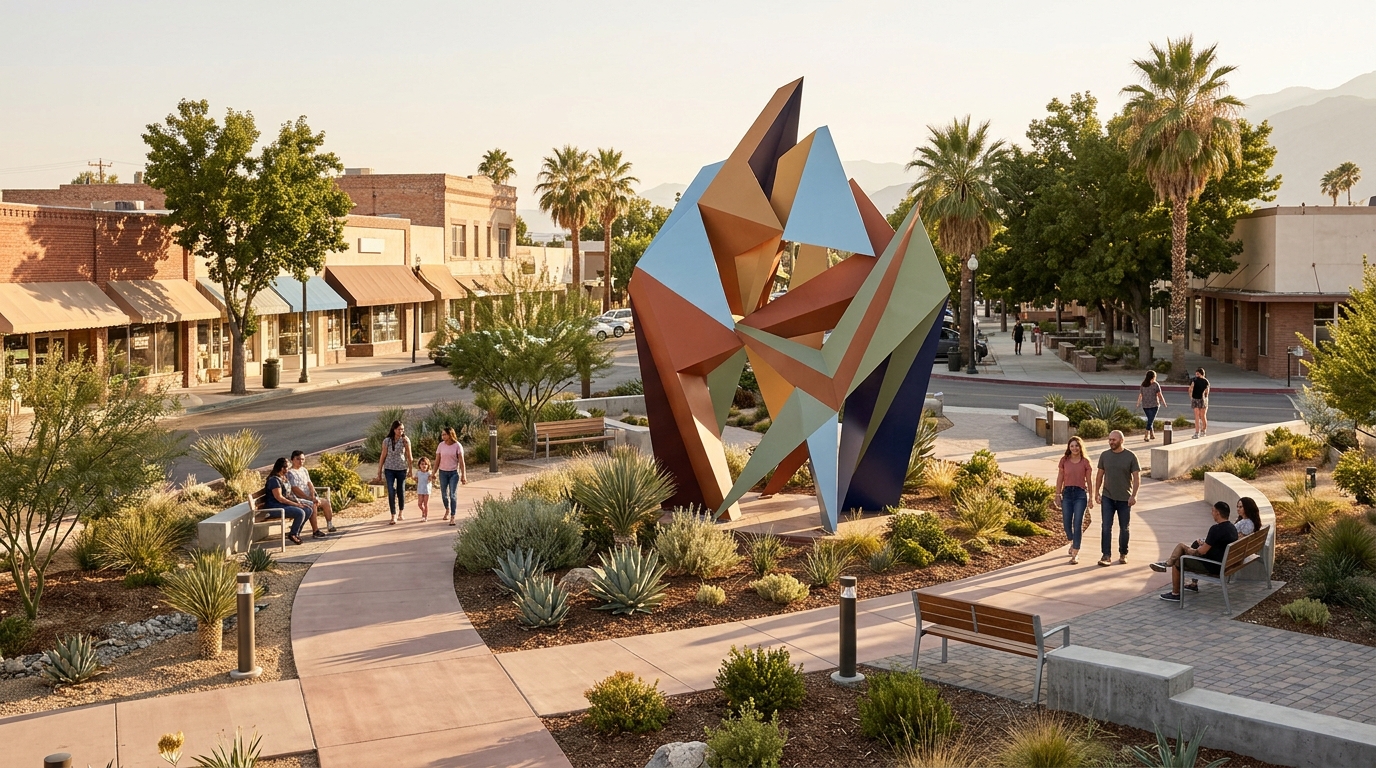
The Hemet Art in Public Places program became part of the city’s planning framework in 2026. On March 24, the City of Hemet adopted Ordinance No. 2026-2073 and described a program for integrating public artwork into certain private and public construction projects. This is a meaningful development for anyone interested in downtown identity, future commercial spaces and how building projects connect with the wider community.
However, a public-art ordinance should not be reduced to a claim that every new building must install a mural. Project eligibility, applicable fees, approved forms of artwork and compliance milestones depend on the adopted rules and the specific project. Homeowners, developers and business operators need to review current city documentation rather than infer requirements from a news headline. This guide explains what has been confirmed, which questions still require official answers and how the program fits Hemet’s broader community story.
What Hemet’s 2026 Public Art Ordinance Actually Establishes
The official City of Hemet Art in Public Places page confirms adoption on March 24, 2026. The city says the program establishes guidelines, procedures and standards for introducing art into new private and public construction. Its stated aims include reflecting Hemet’s history and diversity, strengthening community identity and supporting a more vibrant cultural setting.
These are program objectives, not measurements of future property appreciation. A city can adopt an ordinance without every contemplated project being built, and an artwork proposal can undergo review before it becomes a finished installation. Residents looking at a development announcement should ask which stage it has reached, whether a location is approved and who is responsible for installation and maintenance.
Official Adoption, Purpose and Scope
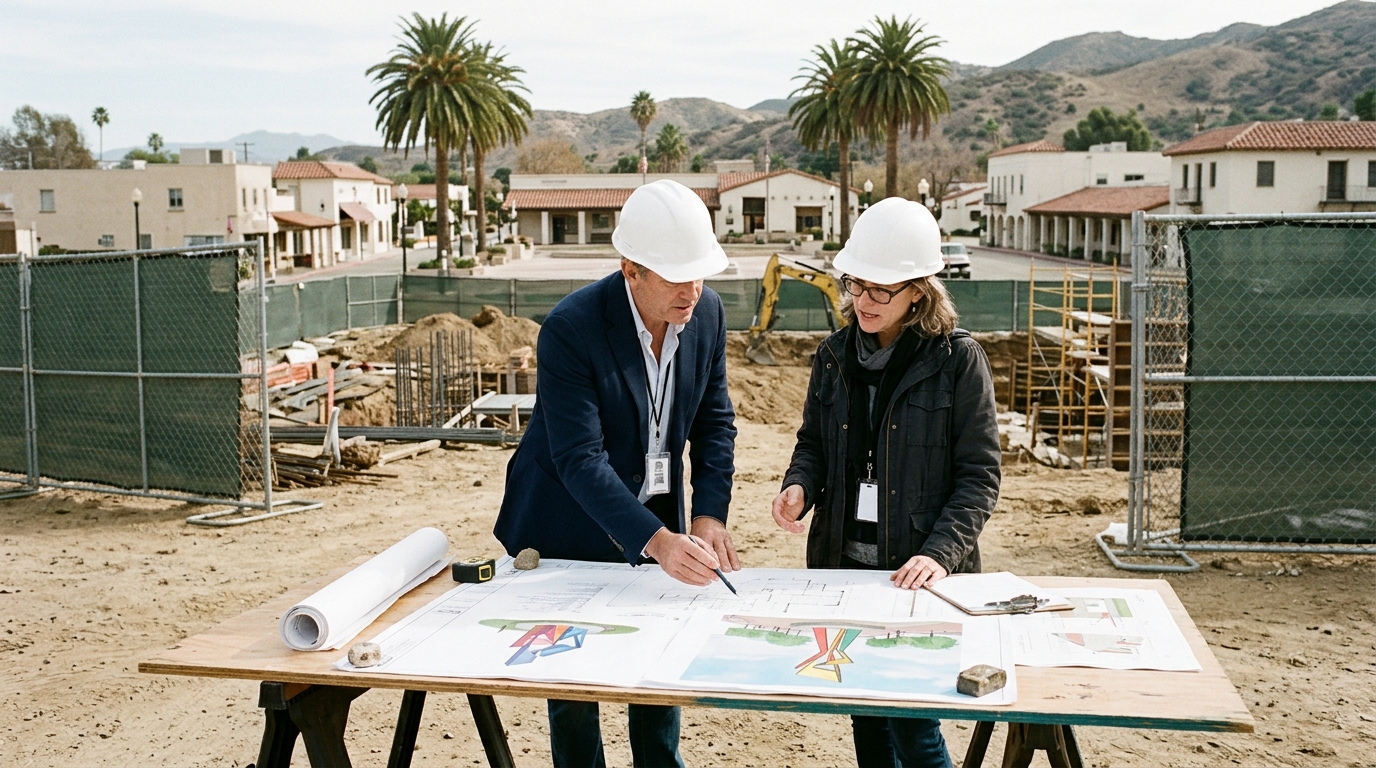
The program is linked to Ordinance No. 2026-2073. The city’s public webpage points readers to the ordinance and a program application, giving property teams a starting point for questions. The program guidelines describe how qualifying projects may meet requirements through approved artwork or other prescribed compliance options. The exact amount due, if any, is not universal; it requires reference to the current fee schedule and applicability rules.
Art in Development Versus City-Initiated Art
The program materials distinguish art associated with development from city-initiated public art. That distinction matters because a developer’s proposed installation is not necessarily processed or funded in the same manner as a project commissioned by a public agency. Responsibility for selecting an artist, obtaining approval, paying costs and maintaining the work must be checked against the relevant provisions. Someone who wants to paint a wall should not assume the same approval process applies to a permanent sculpture within a new commercial project.
Public art can take many forms: murals, sculpture, integrated architectural elements or installations designed for a public-facing setting. The city’s stated vision is broad, but individual eligibility still depends on what the official program accepts. Applicants should request written guidance about qualifying artwork.
What Project Teams Should Confirm Before Permits
Before finalizing a budget, a developer or property representative should establish the project’s classification, value and timing with the City of Hemet. Determine whether the program applies, which review bodies are involved, what documents an application requires and how a proposed artwork is evaluated. Ask whether the site can host suitable artwork, whether public access is required and who will maintain it in the future. The right answer may differ between a new commercial building, a residential project and a city facility.
It is also important to coordinate arts compliance with normal land-use and building requirements. Artwork attached to a structure may affect engineering, accessibility, fire access, lighting or signage. A visually attractive concept does not override other approvals. Readers already navigating local development paperwork can review our Hemet permitting system overview for additional context, then confirm the actual workflow with city staff.
Questions for Builders, Businesses and Property Buyers
For builders, the central issue is compliance: identify requirements early enough to avoid redesigns or unexpected documentation close to project completion. For businesses, questions may concern access, maintenance and contractual responsibility.
Buyers considering a nearby property should interpret the ordinance as planning context, not as a prediction. A proposed art project can add interest to a public space, but it does not establish that rents will rise, safety will improve or every storefront will fill. Property decisions should still rely on location visits, inspections, insurance, financing and documented future projects. Our Hemet RISES property-decision guide explains how to research city strategies without assuming promises are guaranteed outcomes.
Questions to Take to Hemet Community Development
A productive inquiry begins with the exact address or project number. Ask the department whether your proposal is subject to the ordinance, which version of the application applies and whether the selected artwork or alternative contribution must be approved before building permit issuance or occupancy. Also ask who owns the artwork after installation, whether conservation plans are required and which deadlines are legally binding. Do not base financing or schedules on an informal social-media answer.
The City of Hemet lists Planning and Building & Safety departments through its official website. Use the program page as the authoritative document gateway and request clarification directly from staff when documents are unclear. If a contract or major construction expense turns on interpretation, consult a qualified architect, land-use professional or attorney familiar with California municipal requirements.
How Public Art May Influence Downtown Hemet and Local Life
Programs of this kind are often discussed in terms of “placemaking,” meaning efforts to make shared environments feel distinct, welcoming and connected to local identity. Hemet’s stated intentions include celebrating community history and current experiences. That offers a useful lens for residents who want public spaces to reflect the San Jacinto Valley rather than resemble generic commercial corridors.
Actual impact, however, depends on project quality, public engagement, placement, long-term upkeep and whether people can safely experience the work. One sculpture installed behind a fence may function differently from an artwork in an accessible plaza. Residents can pay attention to where projects are proposed, how they relate to shade and sidewalks, and whether neighborhood voices inform the design. No single installation can fix broader challenges such as housing affordability, vacancies or traffic.
The Community Mural Offers a Different Local Example
Hemet already has a recent example of community-centered art: the downtown Your Horizon Is Here mural, unveiled in July 2026 near Florida Avenue and Carmalita Street. Our Hemet community mural guide explains the collaboration among artists, residents and local partners. That mural illustrates how public participation can shape a visible artwork, but it should not be described as proof that every requirement of the newer development ordinance works in the same way.
The mural involved volunteer participation and an artist team; the ordinance formalizes review for qualifying construction projects. Their origins and decision processes differ.
Evaluating Cultural Placemaking Without Property-Price Promises
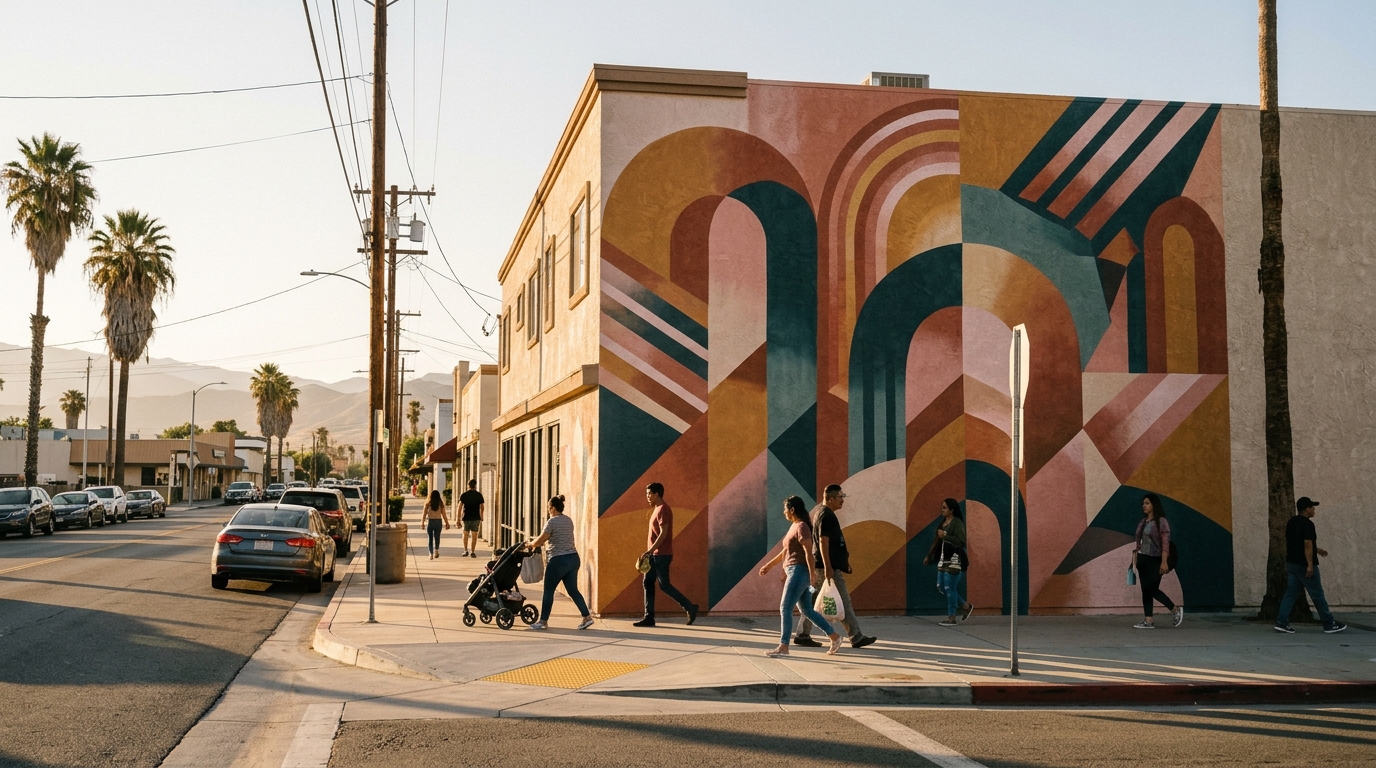
Residents can assess public art using questions that are easier to answer than broad economic promises. Is the site accessible? Does artwork reflect stories from the community? Can people view it without blocking business entrances or traffic? Is a maintenance plan published? Will its materials withstand local sun and weather? These criteria bring the discussion back to actual design and stewardship rather than a speculative return on investment.
Local artists can check the Hemet Valley Art Association’s calendar for arts activities, but city commission eligibility must be verified through the official municipal process.
For households researching a move, public art is one element of community character rather than a substitute for neighborhood diligence. Walk an area at different times, investigate ordinary services and compare routes you will use every week. Our Hemet relocation and neighborhood guide provides a structured framework for those practical questions. Cultural amenities are worth appreciating, but decisions should rest on verified facts about the exact place.
Frequently asked questions: When did Hemet adopt the Art in Public Places program?
March 24, 2026. Which ordinance is involved? Ordinance No. 2026-2073. Does every homeowner need to install public art? Do not assume that; project applicability must be checked against the adopted rules. Is the downtown mural the same thing as the ordinance? No. It is a separate community art project and a useful example of local participation.
The Hemet Art in Public Places program is worth watching because it connects the city’s development process with its cultural goals. For residents, the useful next step is to follow real proposals and ask how artworks will serve public spaces. For builders, it is to get project-specific written guidance early. The city’s official program page remains the best starting point for current requirements.
Editor’s note: This overview reflects publicly available materials checked November 6, 2026. It is not legal, architectural, investment or permitting advice. Hemet Living is an independent publication unaffiliated with the City of Hemet.